When I take the time to look, the common becomes uncommonly interesting. I experience beauty in a crow feather, the sound of creaking eucalyptus branches, water running over stones, or the patterns in the earth at my feet.
Natural objects offer my senses a rich and endless variety of patterns and textures. I am always reminded to look at everything around me, and then to look even closer. New insights do not come from past concepts, but from being in relationship to what is before the eyes. Art then becomes the response to what is seen.
In my Eorthe Forrai throught Monolith series, no paint or brushes were used. Instead, I worked with my hands using clays, hot wax, leaves, sticks, stones, and metals. At one point I would heat up wax. Maybe it was golden, smelling of honey or bleached white, pure and translucent. I used the waxes to help bind the clay and other materials together. But more importantly they added depth and texture to the surface.
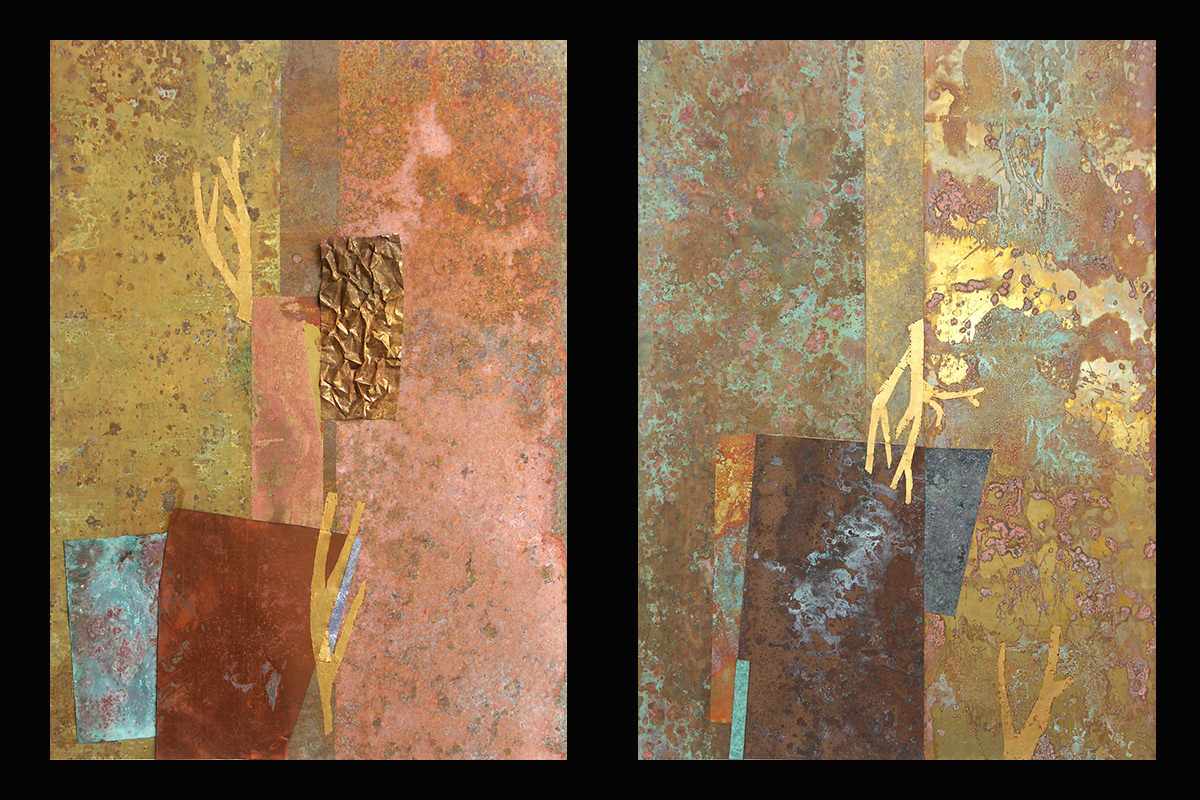
Empty and Be Filled / Wearout and Be New
2009 30x22 inches, patinated metals on paper.
Adhered to heavy watercolor paper is a variety of patinated metal. Added to each is a stylized branch in gold leaf.
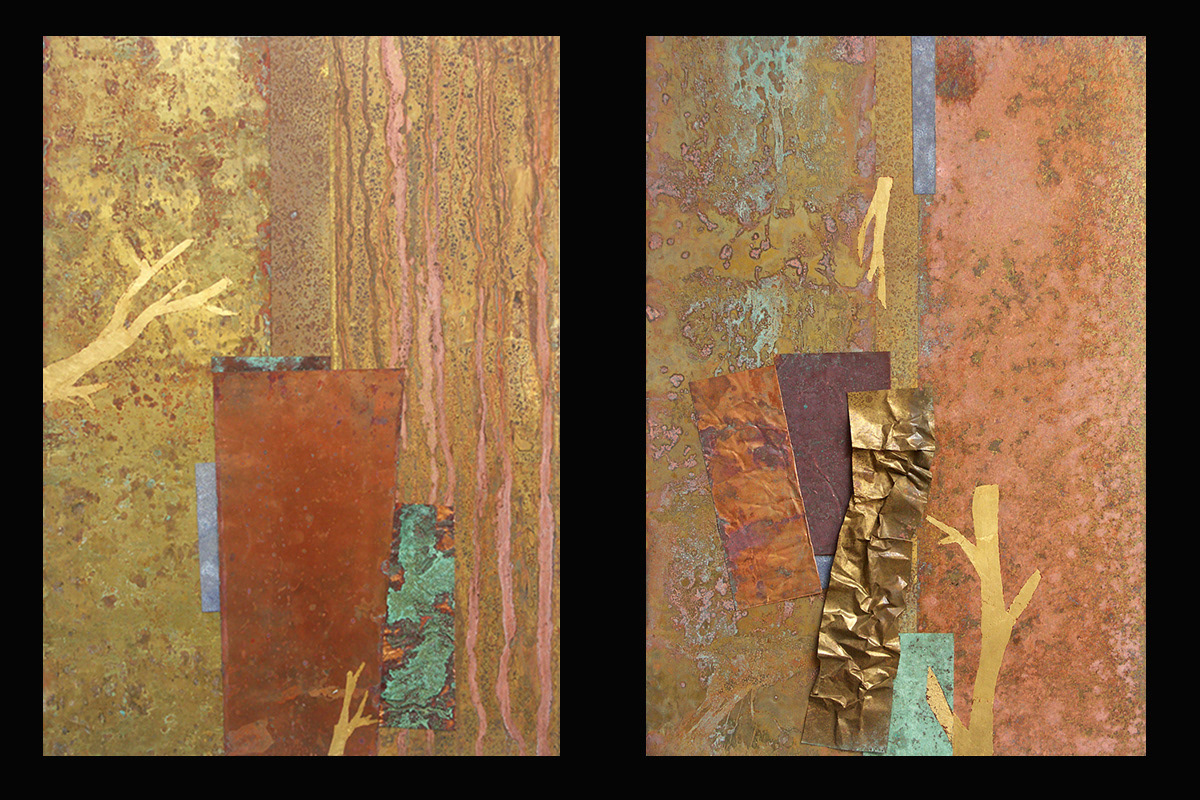
Bend and Be Straight / Yield and Overcome
2009 30x22 inches, patinated metals on paper.
Adhered to heavy watercolor paper is a variety of patinated metal. Added to each is a stylized branch in gold leaf.
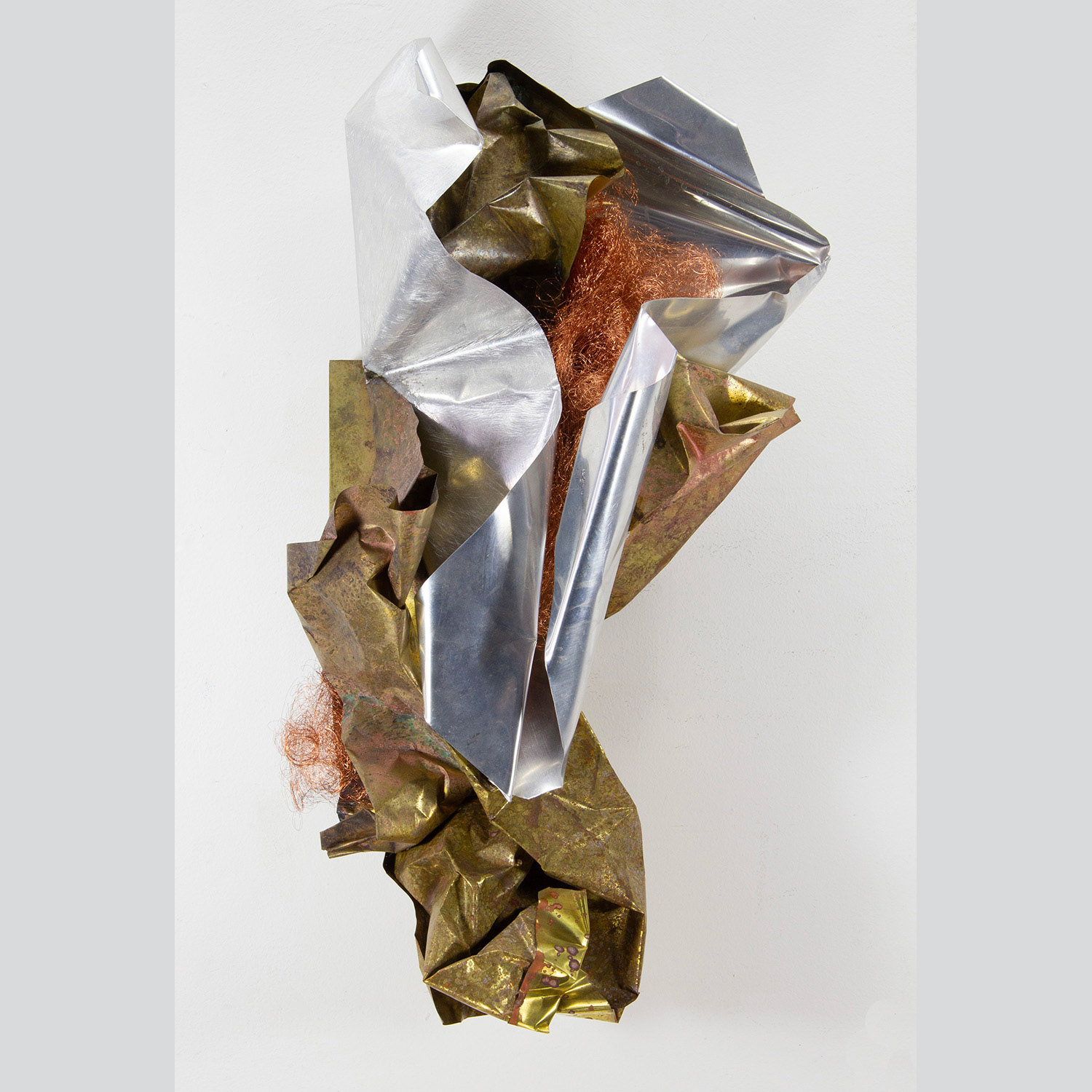
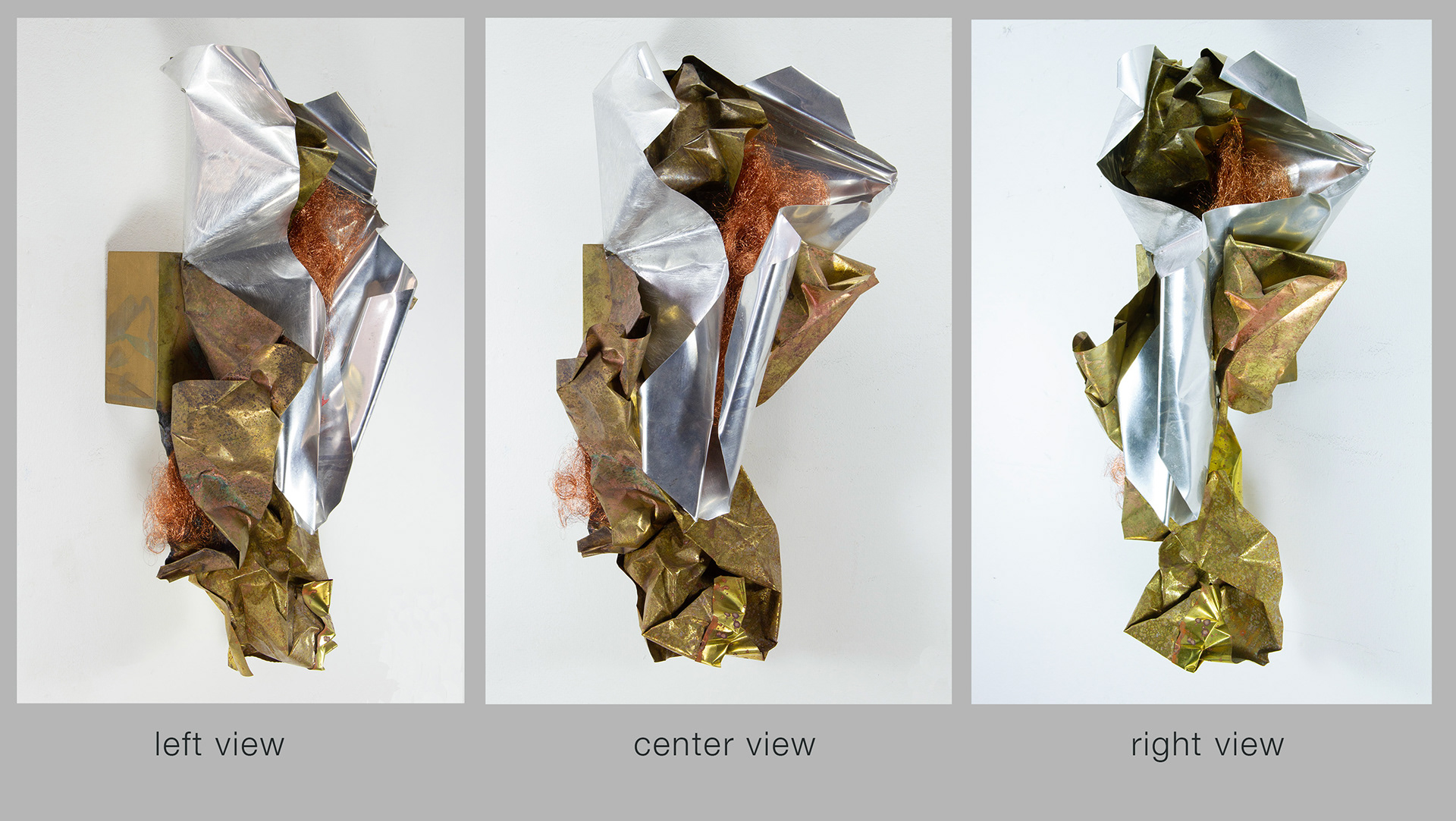
Kaiser
2026/08 18x9x6 inches, aluminum, brass, and copper hairs, on box
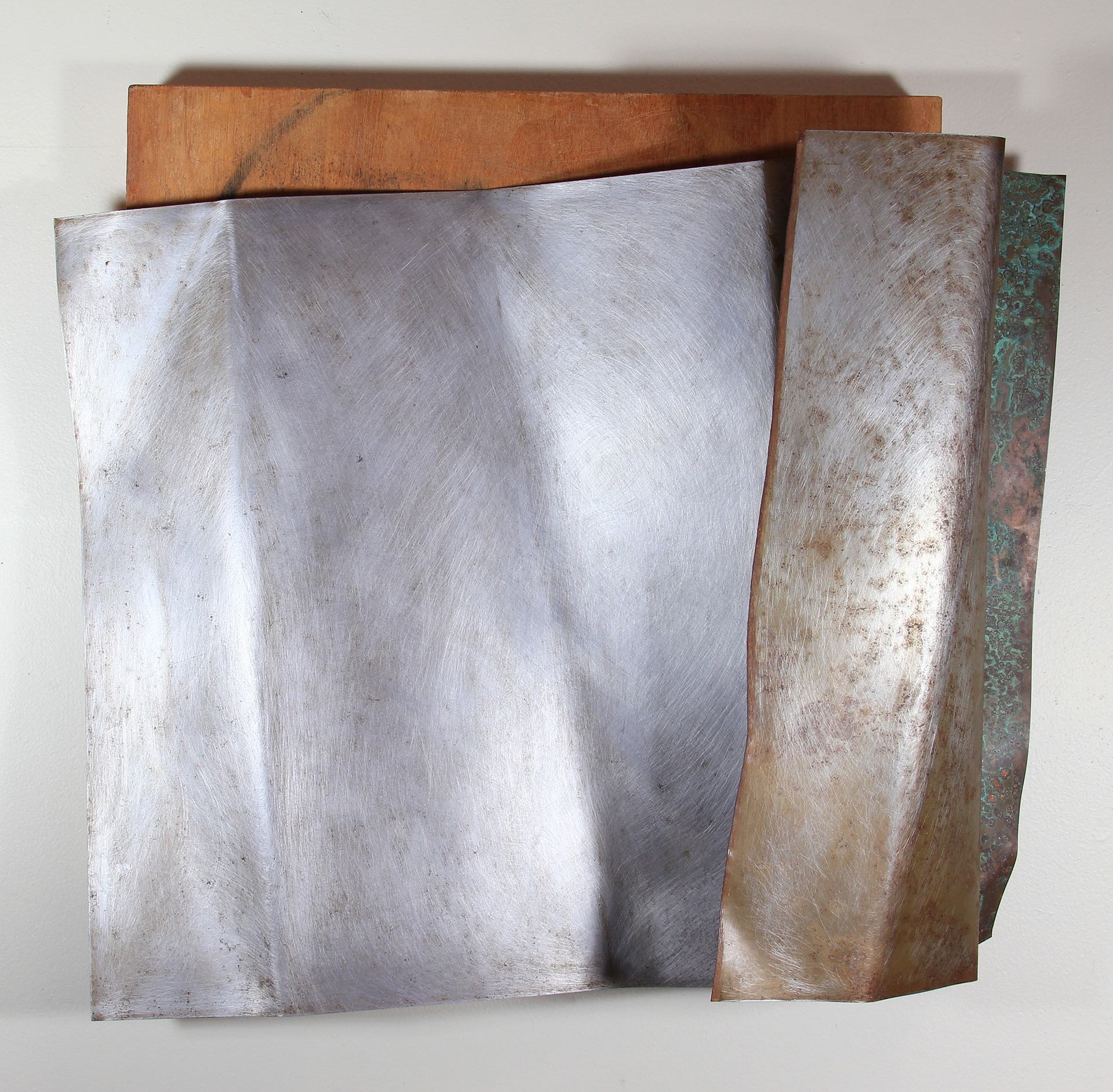
Monolith 28
2014/01 22x21x3 inches, steel and copper on panel
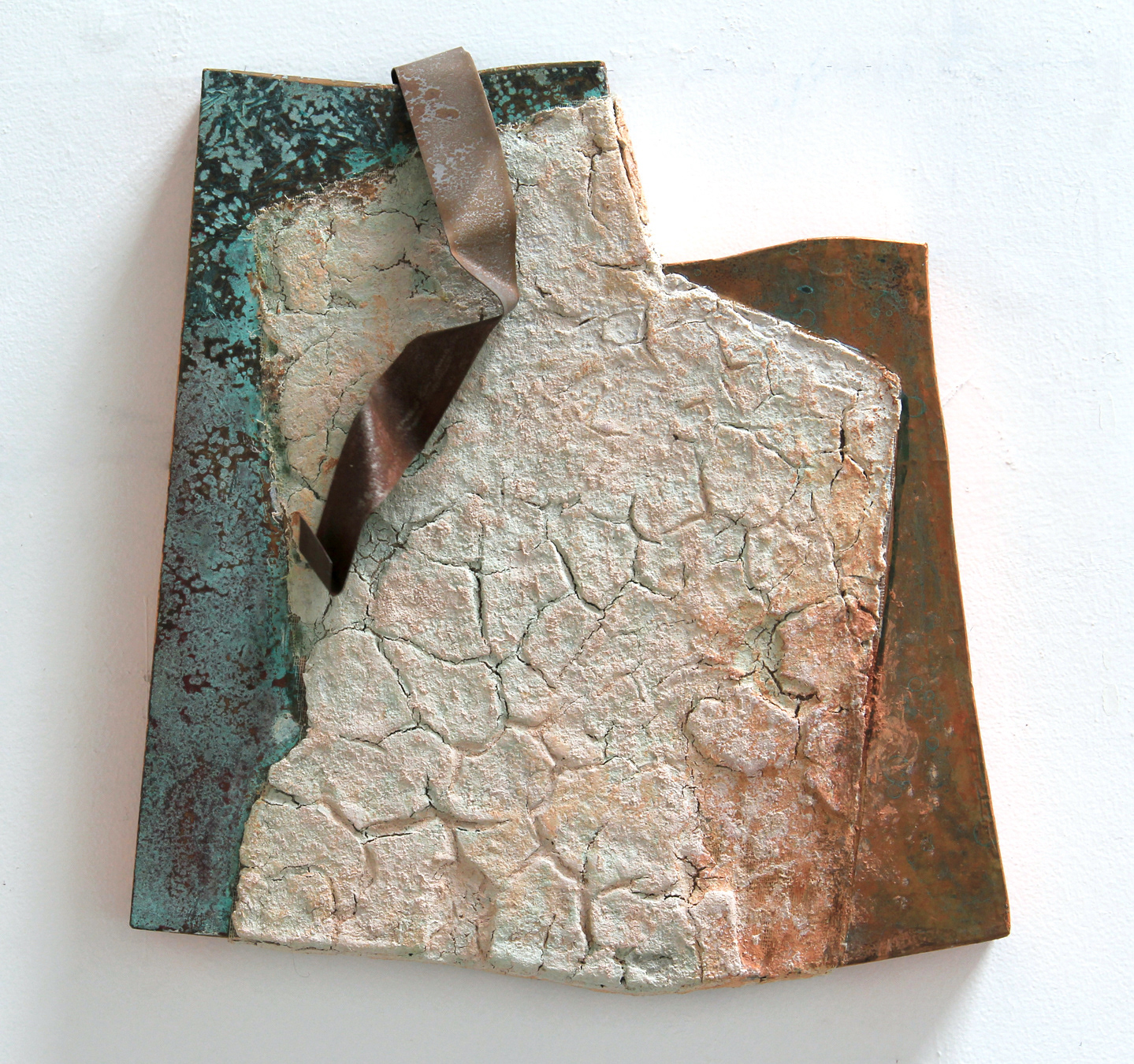
Monolith 19
2000 16x16 inches, copper, steel and clay on irregular panel
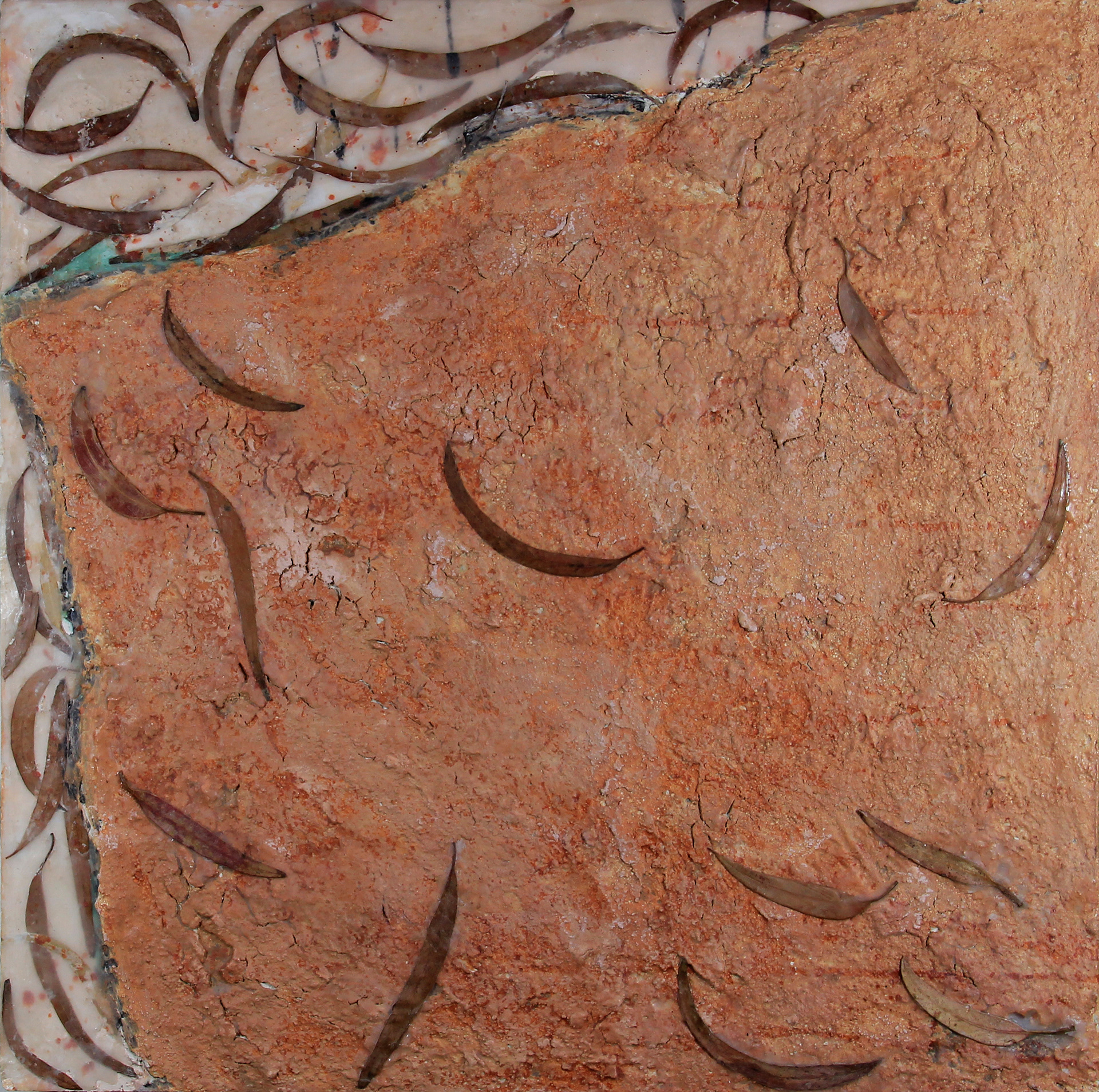
Eorthe Monolith 8
2000 18x18 inches, clay, wax and leaves on panel
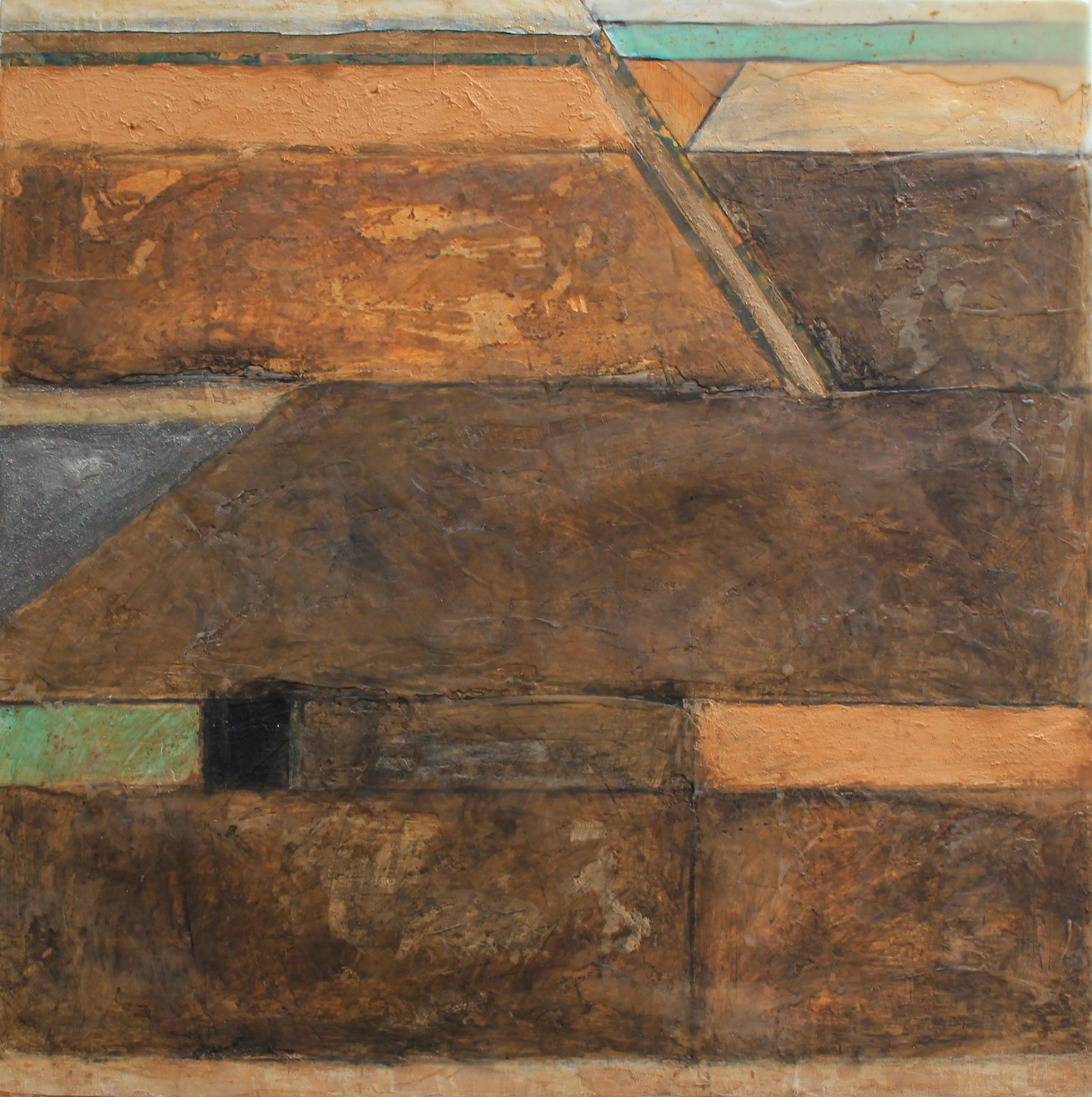
Eorthe Forrai 46
1998 42x42 inches, clay, wax, charcoal, and patina green on panel
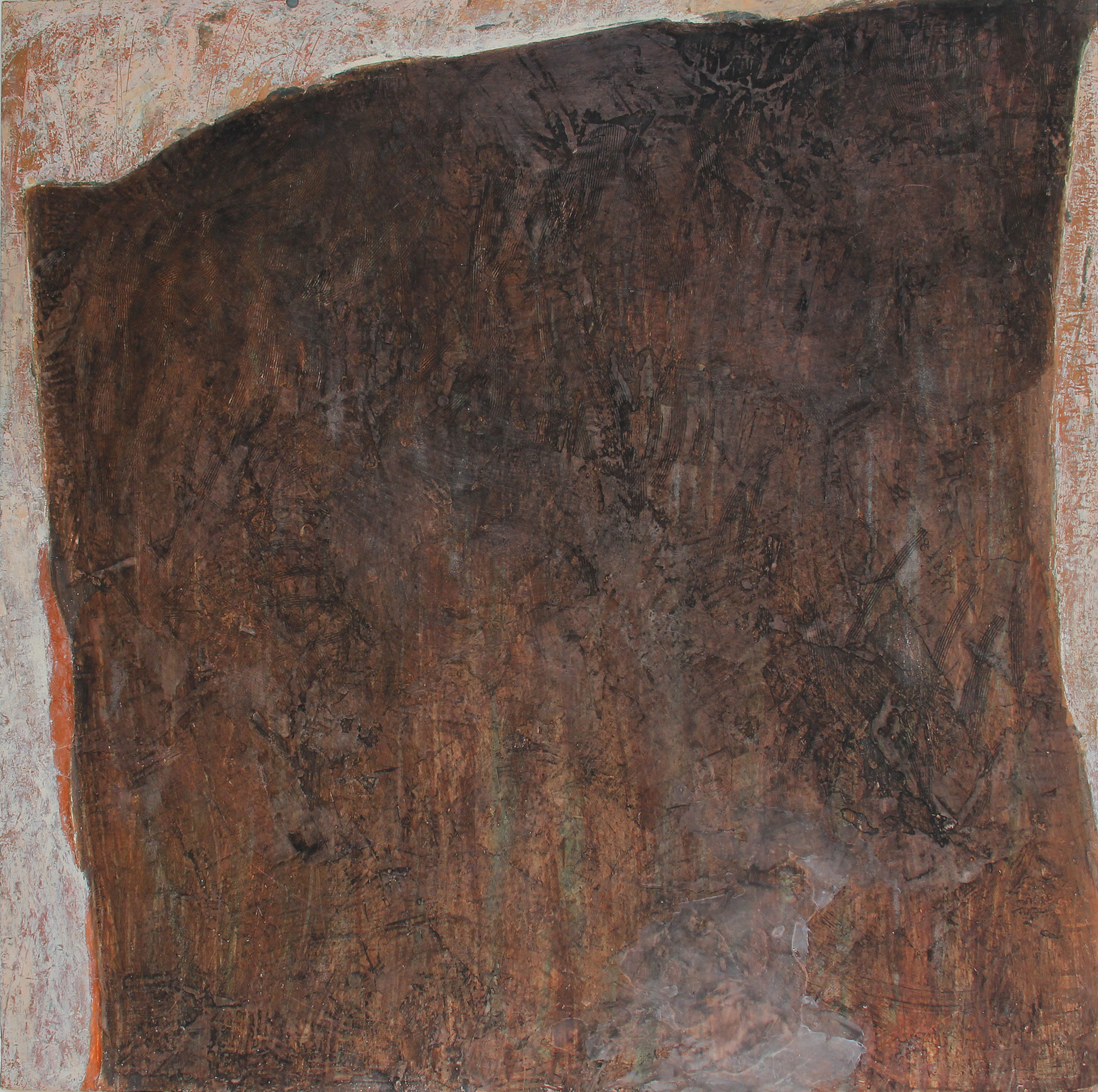
Eorthe Monolith 2
1998 42x42 inches, clay, wax, charcoal, and copper on panel